Architecting for ReliabilityEliminating Hidden Failure ModesBarry S. StahlPrincipal Engineer - AZNerds.net@bsstahl@cognitiveinheritance.comhttps://CognitiveInheritance.com |

|
Favorite Physicists & Mathematicians
Favorite Physicists
Other notables: Stephen Hawking, Edwin Hubble, Leonard Susskind, Christiaan Huygens |
Favorite Mathematicians
Other notables: Blaise Pascal, Daphne Koller, Grady Booch, Evelyn Berezin, Pascal Van Hentenryck |
Fediverse Supporter
|

|
Some OSS Projects I Run
- Liquid Victor : Media tracking and aggregation [used to assemble this presentation]
- Prehensile Pony-Tail : A static site generator built in c#
- TestHelperExtensions : A set of extension methods helpful when building unit tests
- Conference Scheduler : A conference schedule optimizer
- IntentBot : A microservices framework for creating conversational bots on top of Bot Framework
- LiquidNun : Library of abstractions and implementations for loosely-coupled applications
- Toastmasters Agenda : A c# library and website for generating agenda's for Toastmasters meetings
- ProtoBuf Data Mapper : A c# library for mapping and transforming ProtoBuf messages
http://GiveCamp.org

Achievement Unlocked
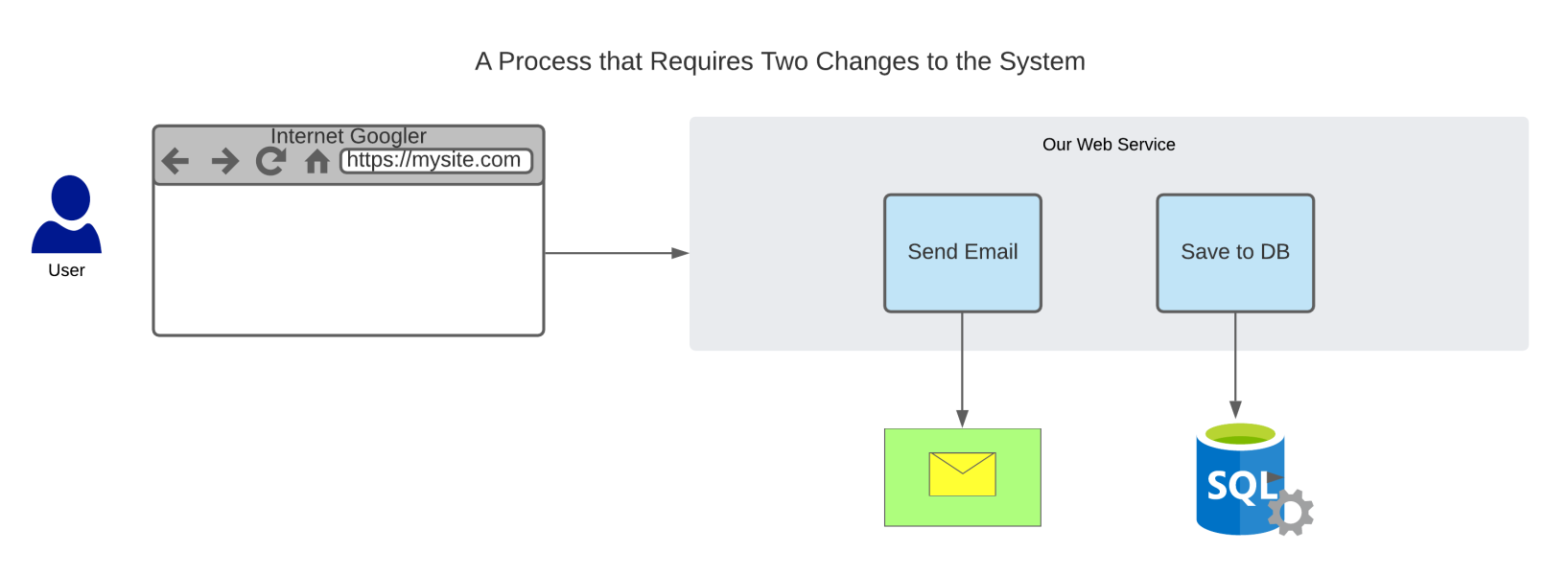
Simple Example
|
|
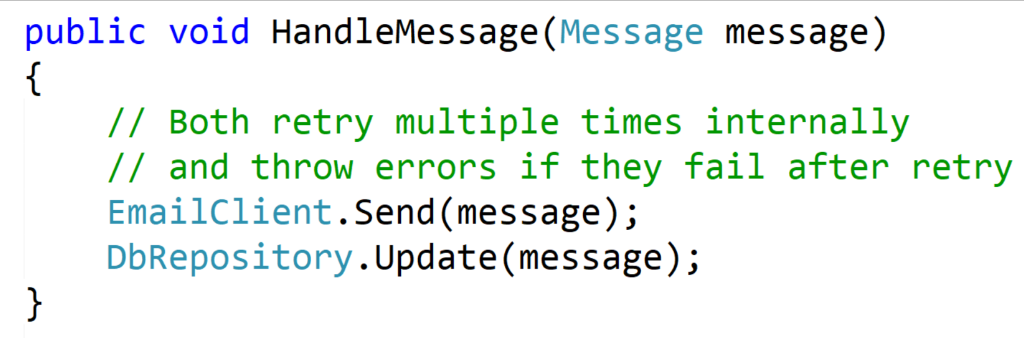

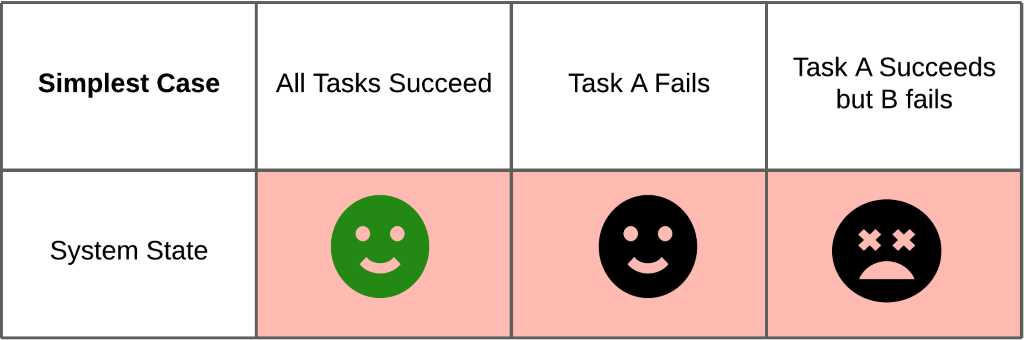
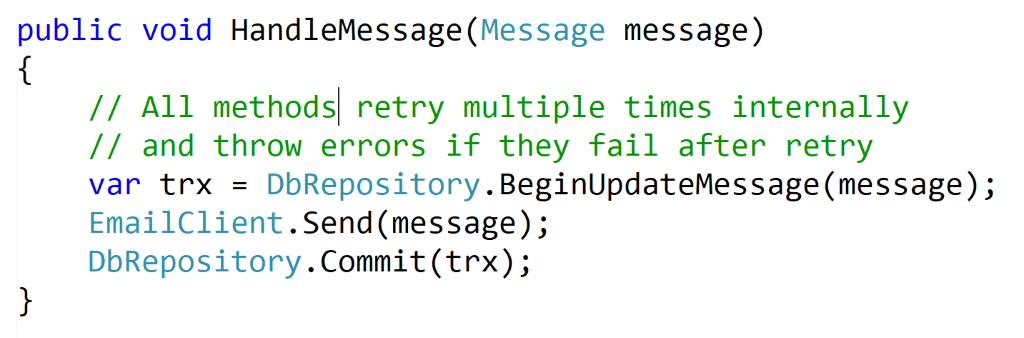
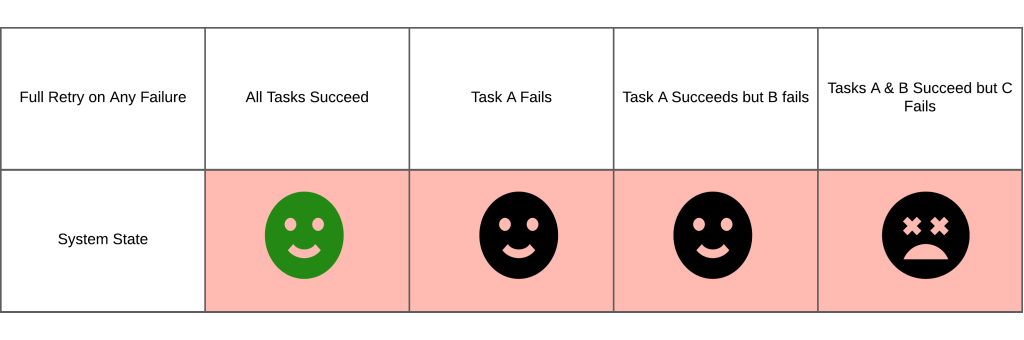
Retry at the Client
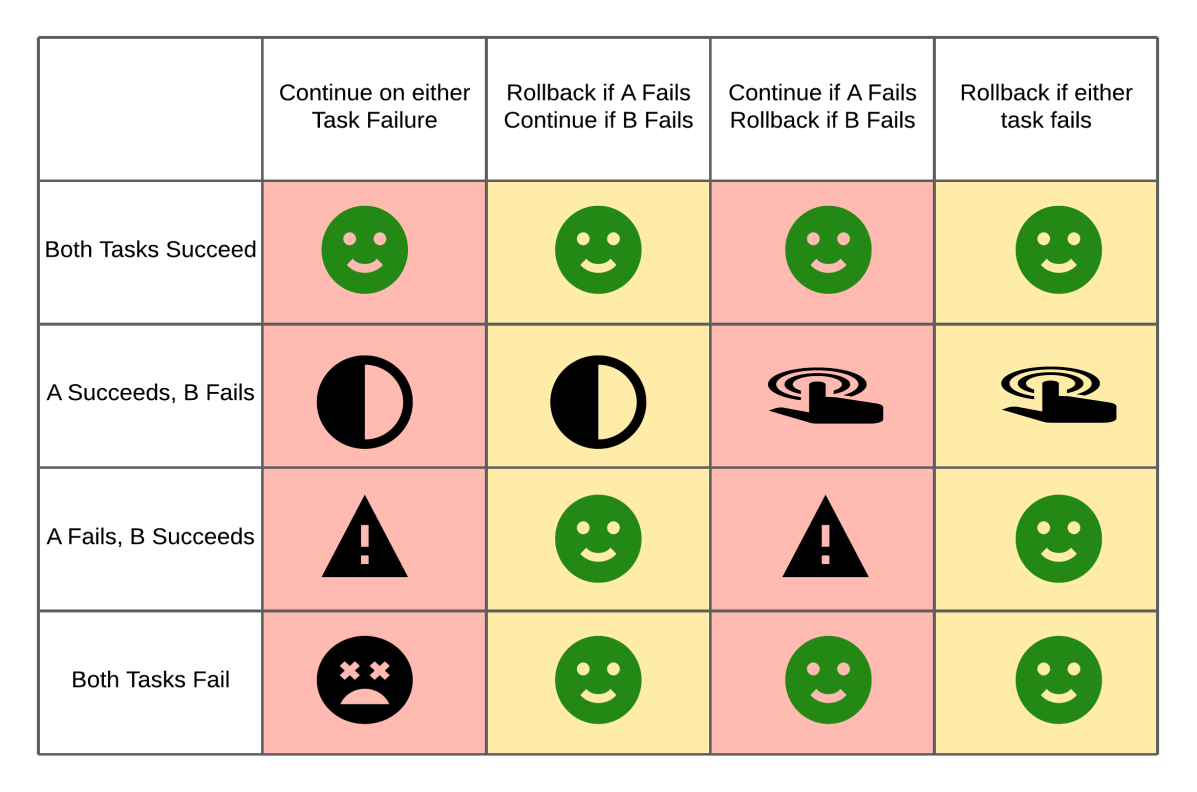
Two At-A-Time
Two changes can be made to system state in a single execution context if:
|

|
Idempotence
[ īdemˈpōt(ə)nce , ˈēdemˌpōt(ə)nce ]
The ability to execute a task an arbitrary number of times (>1) and have the resulting state of the system be the same as if the task was executed once.
What is a Dual-Write?
An attempt to make more than 1 reliable change to the state of a system in a single invocation
- Reliable = Can reasonably be expected to occur ONCE*
- Irrespective of:
- Reliability of the environment
- Reliability of any dependencies
- Irrespective of:
- Change = An ATOMIC modification
- Database or Cache Update
- Message Delivery
- Invocation = Automated Response to a Signal
- User Action
- Message Received
Particularly Pernicious
- Errors resulting from dual-writes can manifest in different ways
- Duplicate Data or Actions
- Duplicate Emails
- Duplicate Billing
- Missing Data or Actions
- No email sent
- No billing issued
- Incomplete Data
- Email sent but no record of it
- Duplicate Data or Actions
- Supporting these systems can be a nightmare
- Difficult to identify when errors occur
- Difficult to remediate
- Extremely difficult to replicate
Avoiding Dual-Writes
Keep It Separate, Keep It Safe
|

|
Isolation Patterns

Transactional Outbox
Goal: Reliably update a Data Store and trigger an additional action
- A single atomic write that makes two updates
- A change to the state stored in the DB
- A command to execute a secondary process
Transactional Outbox Sequence
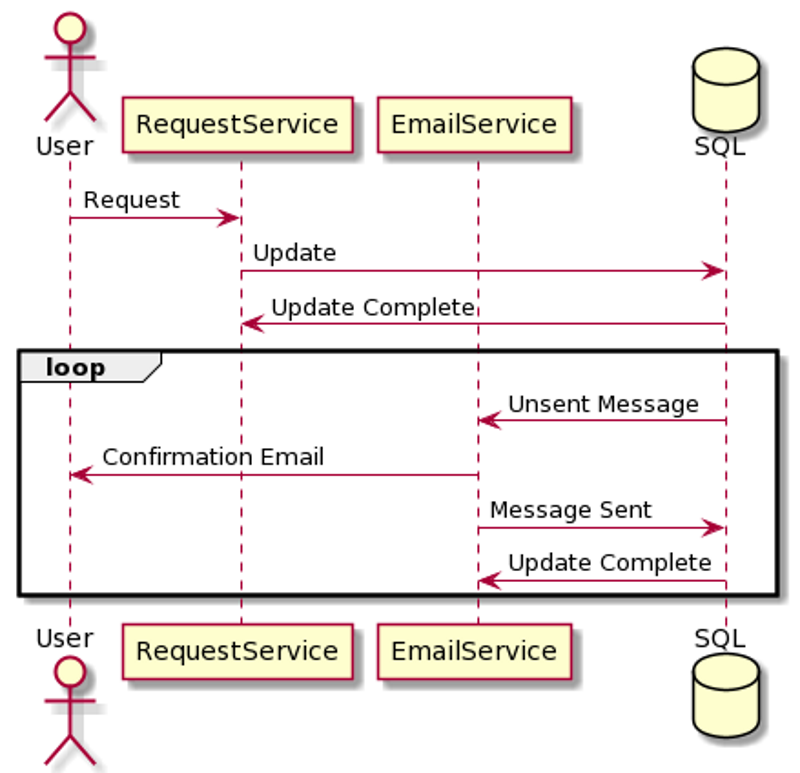
Outbox Pattern
Advantages
- Persist quickly
- Captures every update
- Uses familiar tech
Disadvantages
- Hard to scale
- Harder to fanout than other patterns
- Uses DB as a queue
- Adds weight to the persistance (trx)
- Still susceptible to errors on commit
Change-Data-Capture
Goal: Reliably update a Data Store and trigger an additional action
- A single atomic write that makes one update to the DB
- The DB log is used to trigger the secondary action
CDC Sequence
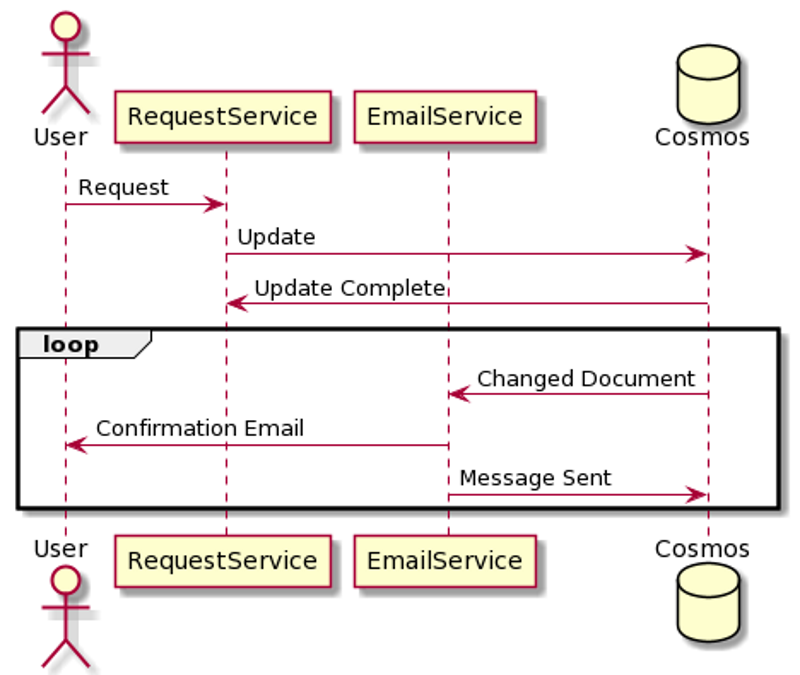
Cosmos CDC
Advantages
- Persist quickly
- Easy to scale
- Easy to fanout
Disadvantages
- Not guaranteed to capture every update
- Still susceptible to errors on commit
Data Streaming
Goal: Reliably persist a message and trigger additional actions
- A single atomic write that makes one update to the message stream
- The stream is used to trigger all actions
Streaming Data Sequence
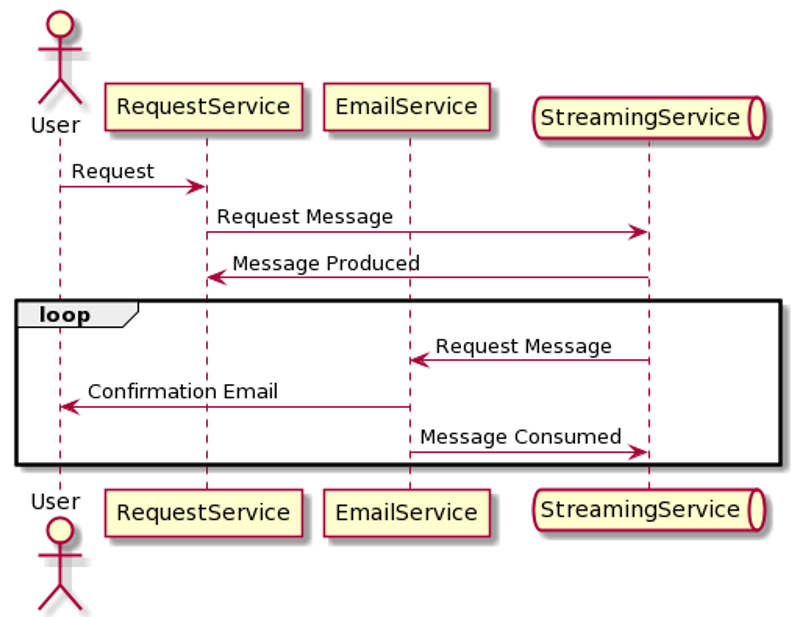
Data Streaming
|

|
These Patterns are Similar
|

|
Avoiding Commit Errors
- These patterns get very close to 4-9's
- Use Idempotence whenever possible
- Exactly-Once Delivery may be possible
- Idempotent ingress (i.e. to Kafka)
- Atomic updates of changes alongside queue offsets
The Saga Pattern
|

|
Saga Orchestration
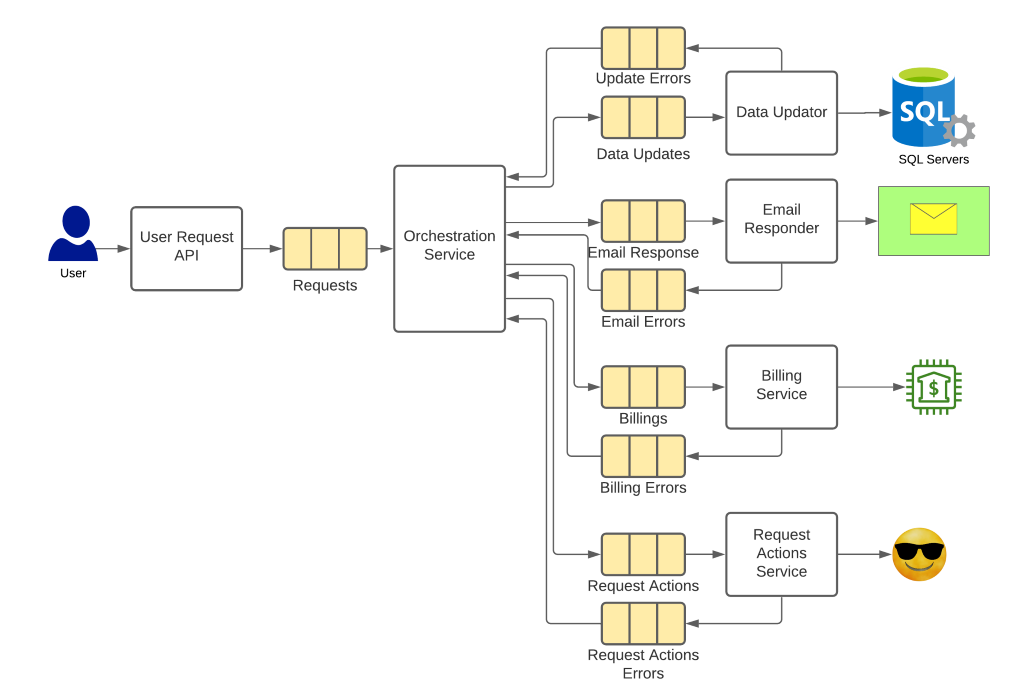
My Ideal Architecture
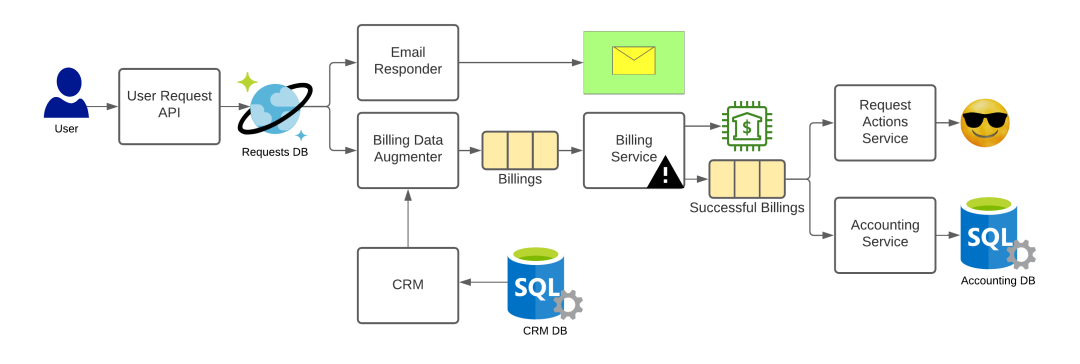
Most Important Takeaway
Never "add on" inside an execution context
Summary
|
|
Resources
|
Appendix A - Uptime Metrics
3-9's (unimportant)
- 99.9% uptime
- 1 outage second in 1000
- ~ 43 min / month
4-9's (important)
- 99.99% uptime
- 1 outage second in 10,000
- ~ 4.3 min / month
5-9's (critical)
- 99.999% uptime
- 1 outage second in 100,000
- ~ 0.43 min (26 sec) / month
Appendix B - Delivery Guarantees
At-Least Once
- Every messages will be delivered 1+ times
- The vast majority of message systems make this guarantee
At-Most once
- Every message will be delivered 0-1 times
- i.e. Logging
Exactly once
- Every message will be delivered 1 and only 1 time
- Very difficult and expensive
- Limited usefulness while maintaining this guarantee
- Combination of idempotent input and a downstream transaction